[lwptoc numeration=”none” title=”Table of Contents” width=”full” colorScheme=”inherit” borderColor=”#0a0a0a” skipHeadingLevel=”h1,h3,h4,h5,h6″]
If your business has a parking lot, ADA striping compliance isn’t optional—it’s required by federal law. But staying compliant is not only about avoiding fines or audits. Well-designed ADA-compliant striping reinforces safety, convenience, and inclusivity—all of which improve your customer experience and protect your business from liability.
Why ADA Parking Lot Striping Matters
1. It’s Federal Law
The Americans with Disabilities Act (ADA) outlines strict requirements for accessible parking. The goal is simple: ensure equal access to individuals with disabilities. Businesses open to the public are legally obligated to follow the guidelines.
2. It Reduces Your Liability Exposure
Incorrect striping is one of the top reasons businesses face ADA complaints or lawsuits. Issues such as improper spacing, missing signs, or faded paint can quickly lead to costly penalties.
3. It Enhances Customer Experience
ADA-compliant parking ensures people with disability can safely and conveniently access your business.
How Many ADA Spaces Do You Need?
One of the most common questions businesses ask is, “How many accessible parking spaces are required?” The total number of spaces in your parking lot determines how many must be accessible. The larger your parking lot, the more accessible spaces the ADA requires to make sure everyone can park safely.
For example, Small parking lots with 1–25 spaces need only one accessible stall, while larger lots must follow a graduated scale, up to 2% for lots with 501–1,000 spaces. Lots with more than 1,000 spaces must provide 20 accessible stalls plus one additional space for every 100 beyond that threshold. Additionally, for every six accessible spaces, at least one must be van-accessible, and all lots must have at least one van-accessible stall.
Standard vs. Van-Accessible Spaces
Not all ADA spaces are identical. Van-accessible stalls have specific additional requirements.
Standard Accessible Space Requirements
- Minimum width: 8 ft (96 inches)
- Access aisle: 5 ft (60 inches)
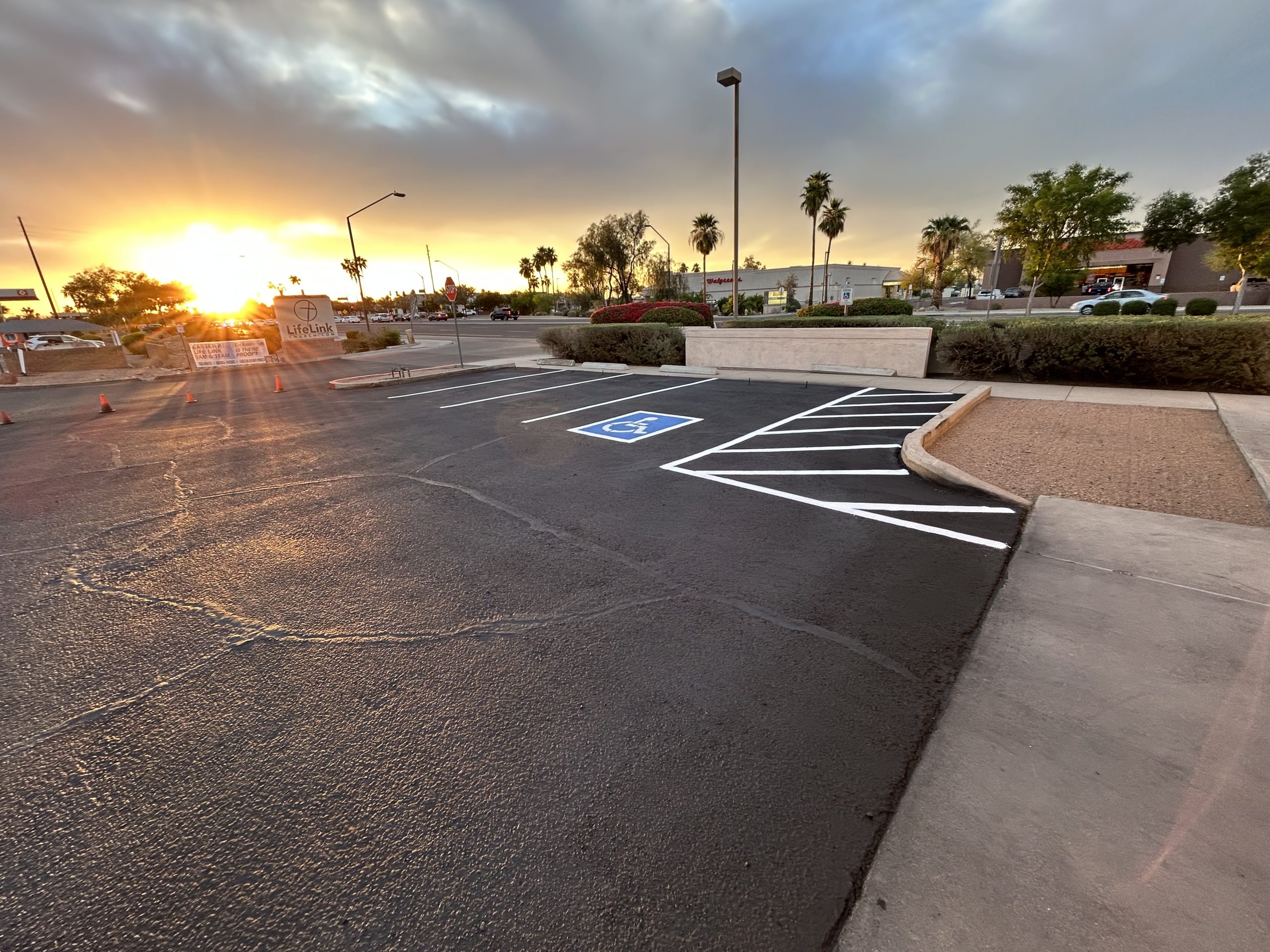
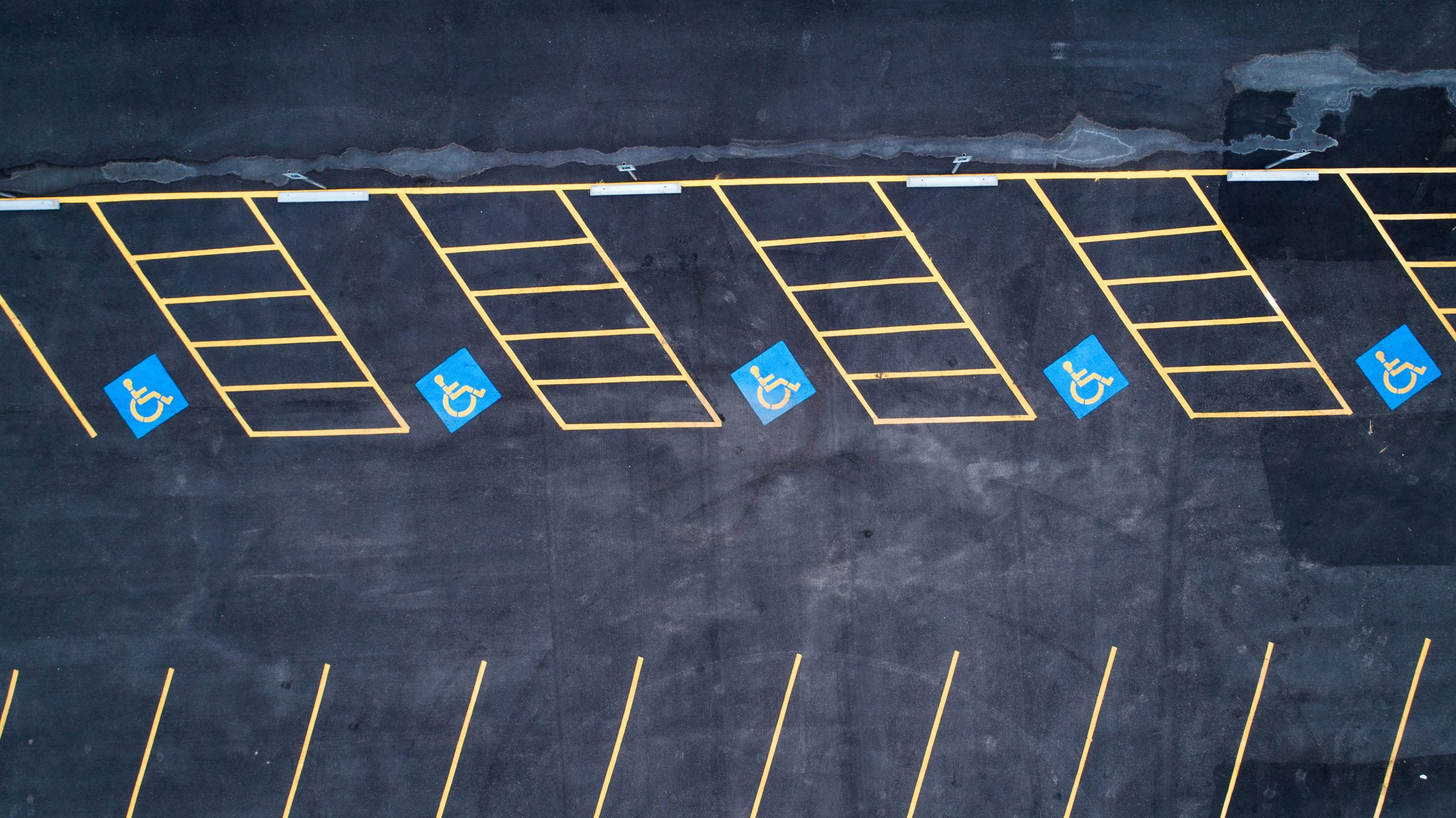
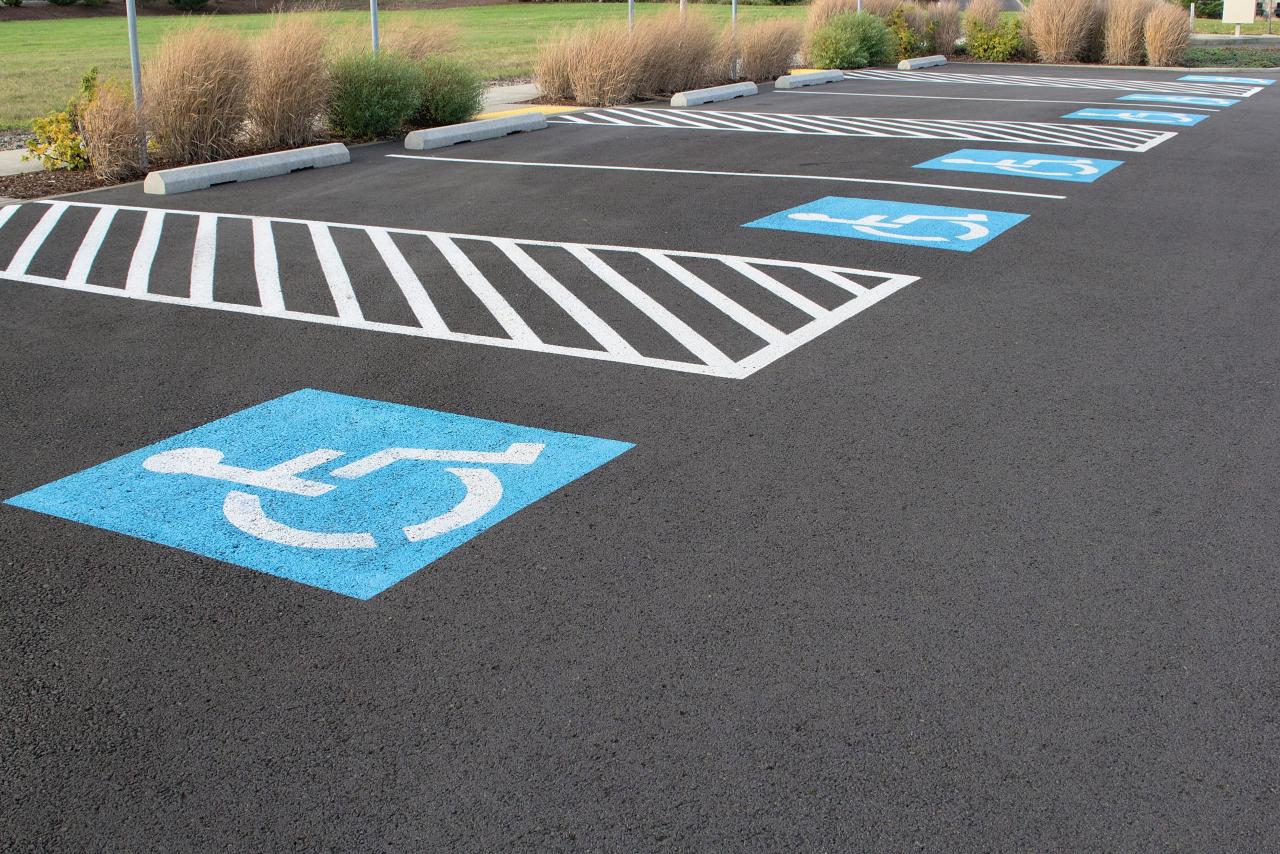
- Markings: Blue striping + crosshatch in access aisle
- Signage: Standard ADA sign with International Symbol of Accessibility (ISA)
Van-Accessible Space Requirements
Van-accessible spaces require:
- Vehicle space width: 11 ft (132 inches) OR 8 ft space with 8 ft aisle
- Access aisle: 8 ft (96 inches) minimum
- Vertical sign: Must include the phrase “Van Accessible.”
- Height clearance: 98 inches for lots with overhead structures
ADA Parking Space Layout & Measurement Requirements
ADA parking standards are precise about layout, angles, and markings.
1. Location
Accessible spaces must be:
- The closest parking spaces to the building’s accessible entrance
- On the shortest accessible route to the entrance
- Located on flat, stable, slip-resistant pavement
2. Striping Colors & Markings
- Most states require blue striping for accessible spaces
- White or yellow is used for general parking, helping ADA stripes stand out
- The access aisle should be crosshatched to prevent vehicles from parking there
3. Slope Requirements
Parking spaces and access aisles must not exceed:
- 2% slope in any direction (1:48 ratio)
This ensures wheelchairs can safely maneuver without rolling.
Access Aisles
- Must be clearly marked with diagonal lines
- Must connect directly to an accessible route or ramp
- Cannot be shared between two accessible spots unless allowed by local code
ADA Parking Lot Signage Requirements
Striping alone isn’t enough—ADA-compliant Signage is mandatory.
1. Sign Height
Signs must be installed:
- At least 5 ft (60 inches) above the ground surface
- Positioned so that snow, dirt, or parked vehicles do not obscure them
2. Symbol Requirements
- Must include the International Symbol of Accessibility (ISA)
- Van-accessible spaces require the additional “Van Accessible” label
3. Permanent Installation
- No temporary or removable signs
- Signs should be mounted on posts or attached to permanent structures
Without proper Signage, a parking space does not count as ADA-compliant—even if the striping is perfect.
Materials Used for ADA Striping
The quality of materials matters for durability, safety, and compliance.
1. Paint Options
- Water-based traffic paint – Most common and cost-effective
- Thermoplastic – Extremely durable; ideal for high-traffic lots
- Epoxy-based coatings – Long-lasting and marvelous for harsh climates
2. Reflectivity Additives
Reflective glass beads help enhance visibility at night.
3. Stencils
ADA stencils help create uniform, professional-looking icons and hatch marks.
4. Surface Preparation
Professional striping companies ensure:
- Power washing or surface cleaning
- Repair of cracks or potholes near ADA spaces
- Proper drying time before application
Common ADA Striping Mistakes (And How to Avoid Them)
Below are the issues that most often lead to ADA complaints or fines, along with practical steps to prevent or resolve them.
1. Faded or Peeling Stripes
Faded or peeling stripes reduce visibility and put your lot out of compliance immediately. To prevent this, conduct regular inspections and plan to restripe your lot every 1 to 2 years. Traffic and weather can take a toll on your parking lines, but using quality paint or thermoplastic keeps them looking good longer and reduces maintenance needs.
2. Incorrect Measurements
ADA stall dimensions must be exact, and even minor errors can result in violations. The best way to prevent this issue is to consult official ADA measurement charts and use professional equipment, such as laser measuring tools. If you find that any stalls are the wrong size, restriping them promptly will bring them back into compliance
3. Missing or Incorrect Signage
Missing or improperly installed Signage is one of the most common and easily avoidable ADA problems. Every accessible parking space should have a permanent sign mounted at least five feet high to ensure visibility. To keep your lot compliant, replace any missing, damaged, or blocked signs as soon as you notice them.
4. Incorrect Access Aisle Width
Van-accessible aisles must be eight feet wide, and painting only five feet is a frequent mistake. Review your striping layout regularly to verify aisle widths match ADA requirements. If an aisle is too narrow, widening it and repainting the crosshatching will fix the problem.
5. ADA Spaces Located Too Far From Entrances
To comply with ADA standards, spaces should be along the shortest accessible route leading to the entrance. Placing them farther away violates regulations. To avoid this issue, evaluate your lot layout and prioritize relocating accessible stalls closer to primary entry points. When making changes, keep accessible routes clear, even, and free from any barriers
6. Improper Slope
ADA parking spaces and access aisles must not exceed a 2% slope, but resurfacing or natural settling can create uneven areas. Conduct periodic slope testing using a digital level or professional evaluation. If the grade exceeds ADA limits, regrading or repaving the affected area is necessary to bring it back into compliance.
7.Using Non-Contrasting Colors
Using colors that blend into the pavement reduces visibility and makes the space confusing for drivers. Always use high-contrast striping colors, such as bright blue for ADA spaces and crisp white or yellow for boundary lines. To address visibility issues, restripe the lines with a higher-contrast paint.
ADA Compliance for Resurfaced or Newly Paved Lots
If you are resurfacing, sealcoating, or repaving your lot, you must update your ADA striping accordingly. Many businesses mistakenly reinstall their old layout without checking whether it meets current ADA standards.
Modern ADA regulations may require:
- Additional accessible spaces
- Revised aisle widths
- New Signage
- Updated placement closer to entrances
A professional assessment ensures you stay compliant after upgrades.
ADA Maintenance Requirements
ADA compliance is not a one-time task; it requires ongoing maintenance to remain valid. Regular maintenance ensures your parking lot stays safe, accessible, and fully compliant with ADA regulations.
1. Restriping Frequency
Most lots need restriping every 1 to 2 years, depending on the climate and traffic flow. Regular inspections help you identify fading lines before they become a compliance issue. Scheduling routine restriping ensures your markings stay clear, visible, and ADA-compliant.
2. Check Visibility Regularly
If the stripes or crosshatching fade, they must be repainted quickly to maintain accessibility standards. Faded markings can confuse drivers and create unsafe conditions. Repainting promptly keeps your parking lot clear, organized, and fully compliant.
3. Inspect Signage
ADA signage must remain visible, intact, and properly mounted at all times. Replace any bent, missing, or faded signs immediately to avoid violations. Keeping Signage in good condition ensures visitors can easily identify accessible spaces.
4. Monitor Pavement Conditions
ADA rules require accessible spaces to have a smooth, stable, and slip-resistant surface. Damaged or uneven pavement can create hazards for individuals using mobility devices. Prompt repairs help maintain safety and ensure your parking lot remains fully compliant.
Benefits of Hiring a Professional ADA Striping Company
While DIY striping may look simple, ADA compliance involves detailed regulations that must be followed precisely. Professional striping teams understand these requirements and deliver results that ensure safety and compliance.
1. Guaranteed Compliance
Professionals stay up to date with federal and state ADA regulations to ensure every detail meets current standards. They understand the nuances of layout, spacing, and signage requirements that many DIY attempts overlook. By relying on experts, you can be confident your lot is fully compliant and protected from violations.
2. Precision Layout and Measurement
Exact measurements are essential for ADA accessibility, and professionals use specialized tools to ensure accuracy. Improper spacing can create safety hazards and lead to costly rework. A precise layout ensures that your parking lot functions correctly and meets all legal requirements.
3. High-Quality Materials
Professional contractors use commercial-grade paints and coatings designed to withstand heavy Traffic and harsh weather. These materials last longer than standard DIY products and maintain visibility over time. Investing in higher-quality striping reduces the frequency of repainting and ongoing maintenance.
4. Faster, Cleaner Results
Professionals complete striping projects quickly, minimizing downtime for your property. Their advanced equipment creates clean, crisp lines that look uniform and professional. This efficient process ensures your parking lot is ready for use sooner and maintains a polished appearance.
5. Reduced Liability
Proper ADA striping helps protect your business from accessibility-related claims and legal issues. When your parking lot meets all regulations, it reduces the risk of accidents or complaints. Working with experts provides peace of mind knowing your property is safe and compliant.
6. Long-Term Cost Savings
Using durable materials and correct installation methods significantly extends the lifespan of your striping. This reduces the need for frequent repainting, saving money over time. Professional work prevents costly mistakes, making it a wise long-term investment.
Creating an ADA-Compliant Parking Lot – Step-by-Step
Here is a simple, actionable process businesses can follow:
Step 1: Evaluate Your Current Lot
Check spacing, Signage, slope, and paint condition.
Step 2: Determine Required Number of Spaces
Use the ADA table from earlier.
Step 3: Create or Adjust the Layout
Place ADA spaces closest to the entrance.
Step 4: Stripe the Parking Lot
Apply correct colors, widths, hatch marks, and symbols.
Step 5: Install Signage
Permanent, upright, correctly positioned signs.
Step 6: Inspect for Accuracy
Verify measurements and compliance.
Step 7: Maintain Regularly
Repaint as needed and replace damaged signs.
Conclusion
ADA Parking Lot Striping Compliance is essential for every business—not just to meet federal regulations, but to promote accessibility, safety, and a positive customer experience. Whether you manage a single storefront or a large commercial property, ADA-compliant striping is a wise investment that protects both your business and your customers.
A professional striping company can help ensure your lot meets all ADA requirements—from layout and measurement to Signage and long-lasting paint applications.
Ready to bring your parking lot up to ADA standards?
Contact Parking Professionals today for accurate, compliant, and long-lasting striping. Let us help you create a safer, more accessible property that reflects your commitment to quality.
📞 Call us today: 480-257-4721 or 602-416-1270
📧 Email: Contact@parkingprofessionals.co
🌐 Visit: Parking Professionals