
Asphalt Crack Sealing

Why Choose Our Crack Sealing Service

Commercial asphalt crack sealing is the mechanical routing and thermal cleansing of pavement fissures followed by the direct injection of hot-applied rubberized thermoplastic sealants. This preventative maintenance protocol stops sub-base moisture infiltration, prevents alligator cracking expansion, and extends commercial parking lot lifecycles by 3 to 5 years. Selecting elastomeric polymers optimized for regional pavement surface temperatures prevents tire tracking and sealant failure.
Arizonas Crack Sealing Parking Professionals

Asphalt Crack Sealing Services in Arizona: The Expert Solution for Pavement Longevity

Asphalt crack sealing is the most cost-effective preventative maintenance procedure used to extend the lifespan of Arizona pavements by preventing water infiltration and sub-base erosion. By sealing cracks in Phoenix’s high-heat environment, property owners can delay expensive repaving and maintain structural integrity for up to 5–7 years per application.

Why Crack Sealing is Non-Negotiable in the Arizona Climate

While many believe rain is the primary enemy of asphalt, in the Phoenix Metro area and across the Sonoran Desert, thermal expansion and UV oxidation are the true catalysts for deterioration. Our “Expert Layer” analysis shows that untreated cracks in Arizona can expand by up to 25% annually due to extreme diurnal temperature swings.

Feature

Standard Crack Sealing

Parking Professionals “Desert-Spec”

Material

Standard Rubberized Bitumen

High-Float Polymer Modified Mastic

Heat Resistance

Up to 140°F

Sustained integrity up to 210°F

Preparation

Basic blowing/debris removal

Heat-lance sterilization & routing

Drying Time

4–12 Hours

Traffic-ready in < 60 Minutes

The Decision Journey: When to Seal vs. When to Replace

Understanding where your pavement sits on the lifecycle curve is critical for return on your investment.

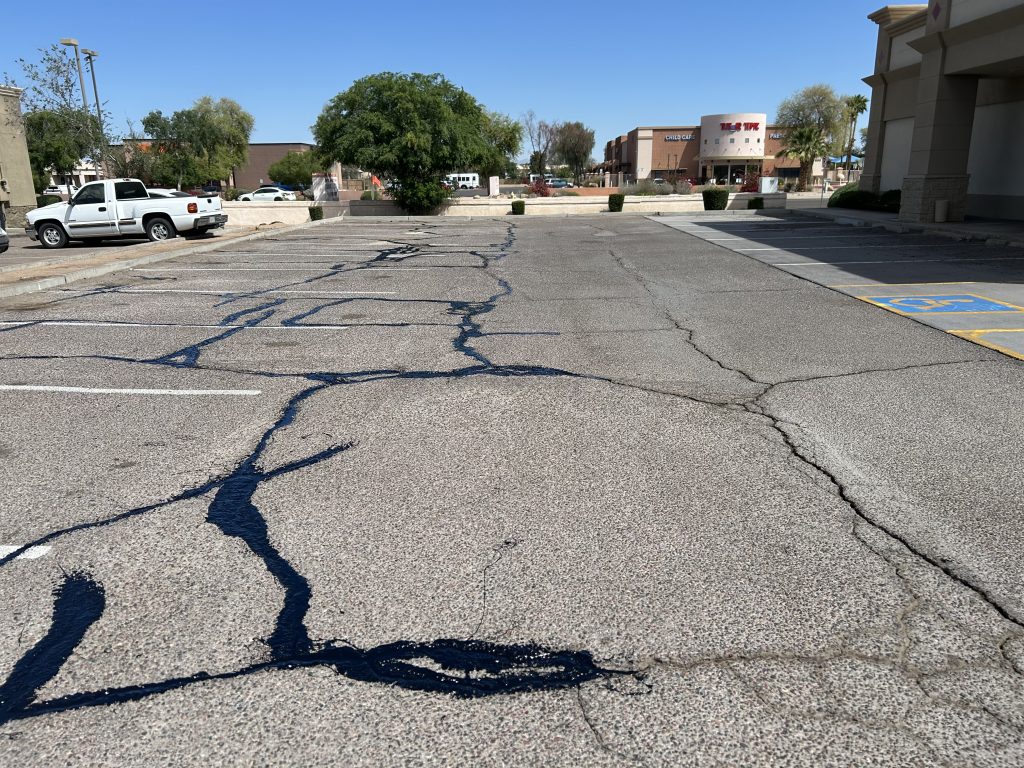
  1. The “Why” of Asphalt Crack Sealing: Small “hairline” cracks are the first sign of oxidation. Sealing now costs pennies compared to the dollars required for future repairs.
  2. The “How” the job is completed: We utilize ASTM-D6690 Type II hot-applied sealants, specifically engineered to remain flexible during cold desert nights while resisting “tracking” (sticking to tires) during 115°F summer days.
  3. Our “Action” at your work site: Our crews provide rapid mobilization for commercial lots, HOAs, and industrial parks across Phoenix, Scottsdale, Mesa, and statewide.
 
Parking Professionals Crack Sealing
 

Our 4-Step Professional Sealing Process Summary

To ensure maximum adhesion, we follow a rigorous technical workflow:

  1. Mechanical Routing: We create a “reservoir” for the sealant, ensuring it bonds to fresh, un-weathered asphalt sidewalls.
  2. Heat-Lance Cleaning: We use 2,000°F compressed air to remove moisture and vegetation, “pre-heating” the asphalt for a thermal bond.
  3. Pressure Injection: Hot sealant is applied at 375°F directly into the crack using high-pressure wands.
  4. Overband Finishing: A 3-inch wide “bandage” is struck off to protect the edges and provide a watertight seal. 
  5. Read a more detailed explanation below

Frequently Asked Questions (FAQ)

How long does asphalt crack sealing last in Arizona?

In the Phoenix valley, professional-grade crack sealing typically lasts 3 to 5 years. Factors like traffic volume and existing sub-base stability will influence longevity.

Can you seal cracks in the summer?

Yes. While the ambient temperature is high, we use specific “stiff” binders designed for desert climates that won’t melt or track onto carpets and storefronts.

What is the difference between crack sealing and crack filling?

Sealing is a permanent, flexible repair involving routing and specialized rubber; filling is a temporary “band-aid” using cold-pour liquids that often fail within one season.
 

Past Asphalt Crack Sealing and Asphalt Sealcoating to Maintain and Extend the Life of the Parking Lot


The Crack Sealing: The 4-Stage Mechanical Sealing Method

1.Mechanical Routing & Fissure Profile Optimization:Execution Phase 1.

Fissures under 1.5 inches wide are carved out utilizing a vertical rotary cutting machine to establish a minimum 0.5-inch by 0.5-inch square reservoir. This structural profile maximizes the adhesive surface area and creates an engineered expansion chamber for the polymer sealant.

2.Thermal Heat-Lance Decontamination:Execution Phase 2.

The newly routed reservoir is treated with a high-velocity compressed-air heat lance operating at 2,000°F. This high-temperature blast vaporizes latent organic matter, strips away deep-layer moisture, and removes micro-debris, preparing an open-pore bituminous wall for maximum chemical cross-linking.

3.Hot-Polymer Thermoplastic Injection:Execution Phase 3.

Federal-specification rubberized asphalt crack sealant is melted to exactly 380°F inside an oil-jacketed melter-applicator. The liquefied elastomeric compound is injected into the prepared channel from the bottom up to prevent interior structural air pockets and structural shadowing.

4.Overband Striking & Finishing:Execution Phase 4.

The hot sealant is struck flush into an overband configuration forming a clean 1-inch band on either side of the fissure. To allow immediate traffic access to commercial shopping centers or managed assets, a de-tackifying agent or fine aggregate sand is lightly applied over the cooling seal.

High Heat Enviroments

In high-heat and variable moisture environments like Arizona and Alabama, water infiltration causes severe damage even without a freeze-thaw cycle. When rainwater enters an unsealed crack, it pools directly in the aggregate sub-base. As heavy vehicles cross the surface, the tires apply intense down-force, creating destructive hydraulic pressure beneath the asphalt. This pressure forces water laterally through the subgrade, washing away fines and creating hidden voids.

The unsupported asphalt surface then fractures under traffic weight, developing into deep alligator cracking that requires full-depth milling rather than a simple surface treatment.

Material Grade Comparison Chart To Determine The Best Asset Protection

Engineering MetricCold-Pour Liquid Asphalt EmulsionsHot-Applied Rubberized Polymer (Federal Spec)
Elastic Elongation LimitLow (<20% expansion retention)High (>400% elastic recovery)
Max Surface Temperature TrackingSoftens and bleeds at 115°FRemains chemically stable up to 165°F
Adhesive Bonding MechanismSimple mechanical surface tensionDynamic thermal cross-linking to bitumen
Expected Structural Lifespan6 to 12 Months (Temporary fill)3 to 5 Years (True asset preservation)

Parking Lot Crack Sealing

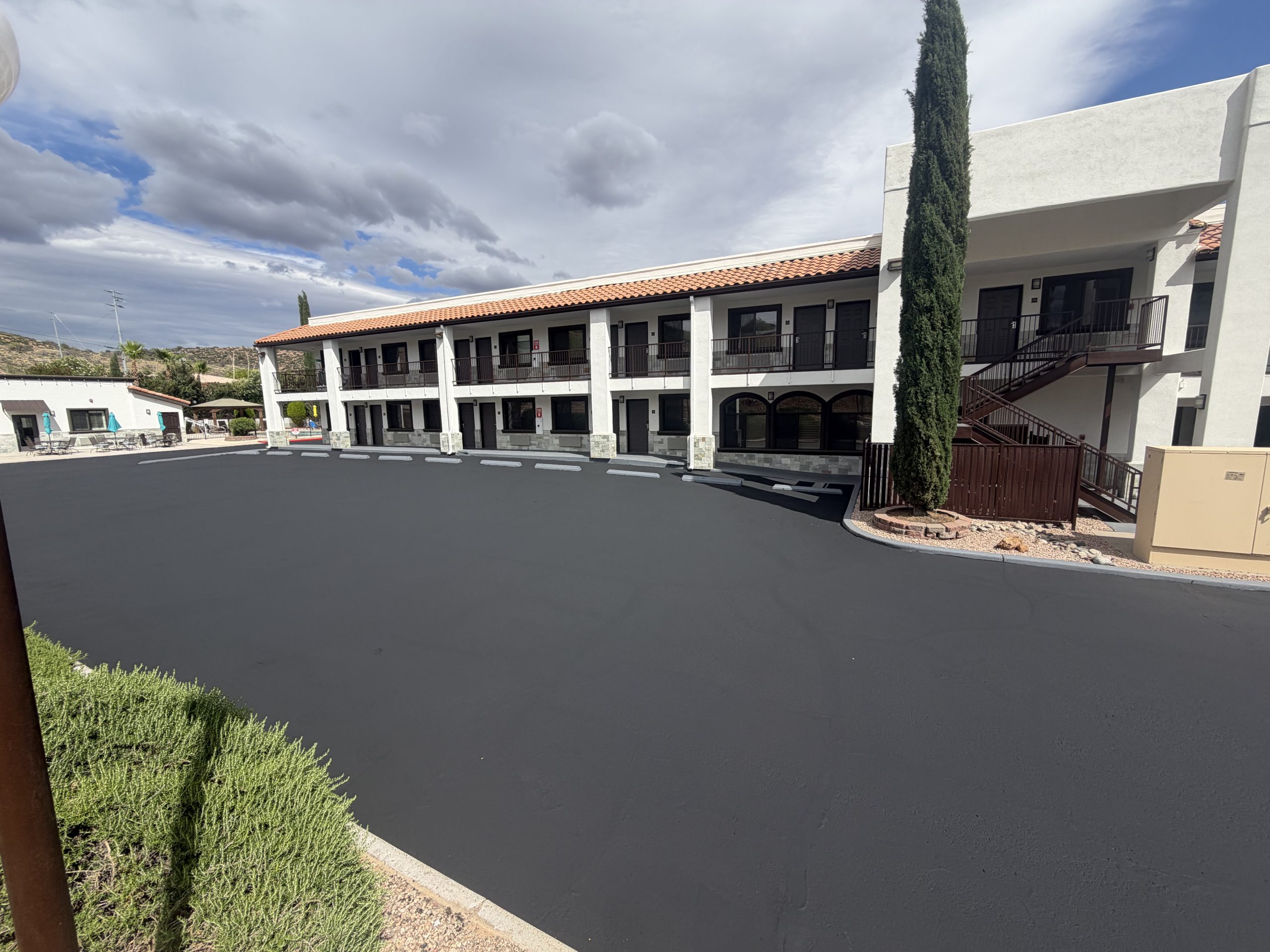
Asphalt sealcoating is the application of a protective bituminous or polymer-modified emulsion layer over cured pavement surfaces. This maintenance layer locks out moisture, prevents aggregate raveling, and neutralizes the chemical breakdown caused by ultraviolet radiation. Applying high-solids sealcoating directly over fresh hot-poured elastomeric crack sealing doubles the operational lifecycle of commercial parking structures.

Parking Lot Striping

Professional parking lot striping is the application of highly durable, federal-specification traffic coatings to delineate stalls, directional lanes, and fire zones. Crisp marking layout maximizes space utilization, streamlines property traffic logistics, and mitigates corporate liability. Restriping is legally required following crack sealing and sealcoating to maintain federal ADA and municipal safety compliance.

Bollard Installation

Professional bollard installation is the strategic anchoring of heavy-duty, concrete-filled steel safety posts to protect building structures, utilities, and pedestrians from vehicle impacts. Positioned near storefronts, pedestrian walkways, and vulnerable utility meters, code-compliant bollards prevent property damage and lower commercial insurance liability profiles.